Inspection at volume
Manual checks become harder to keep consistent across long shifts, product variants, and changing conditions.
More visibility on the floor. Less manual effort around it. Connect cameras, documents, and operational systems so teams can spot exceptions earlier, record them consistently, and act with the right context.
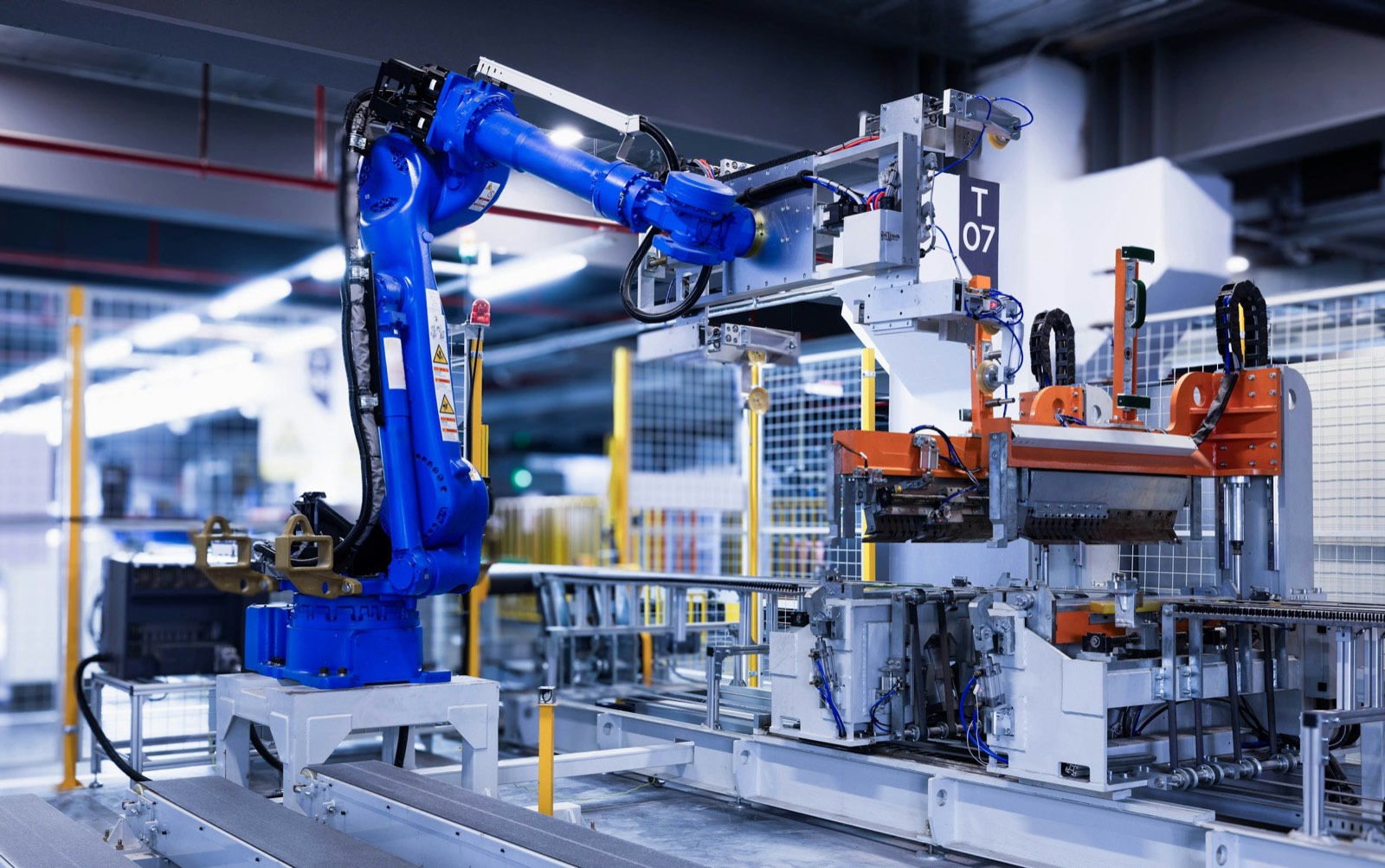
Flag visible defects, missing components, or inconsistencies for an operator to confirm.
See all applicationsCommon pressures in manufacturing & industrial operations.
Manual checks become harder to keep consistent across long shifts, product variants, and changing conditions.
Quality, maintenance, and production information is often captured on paper or in spreadsheets, then re-keyed.
Issues are noticed after the fact, when rework and delay already cost more.
Information about lines, shifts, and stock sits in separate systems and is hard to compare.
Each application is scoped to your data, systems and approvals.
Flag visible defects, missing components, or inconsistencies for an operator to confirm.
Computer visionCount defined parts, packs, or items at agreed checkpoints and reconcile against expected quantities.
Computer visionDetect agreed visible conditions, such as protective equipment or restricted-zone entry, with human review.
Computer visionDigitise checklists and logs, extract key fields, and route issues to the responsible team.
AI automation & agentsBring line, shift, and quality data into consistent pipelines and dashboards.
Data & AI engineeringLet teams query SOPs and work instructions in their preferred language.
Generative & conversational AIHow one of these applications runs day to day.
We work through these questions with you during discovery.
Lighting, angle, line speed, and product variation all shape what is reliable. We assess these before committing to a model approach.
Latency, bandwidth, and data-handling needs decide whether analysis runs on-site, in your cloud, or both.
Findings are most useful when they reach your MES, ERP, or quality tools. We map the integration early.
Operators keep decision authority. The system supports their judgement rather than replacing it.
Our own fine-tuned vision models, applied to multiple real-world use cases.
Intelligent workflows that connect your people, processes, and systems.
The data pipelines, integrations, and infrastructure that make AI work.
Useful assistants and copilots, grounded in the information that matters.
Something else on your mind? Ask us directly.
Sometimes. We review image quality, placement, lighting, and the target task first. Some environments need repositioned or additional cameras.
It depends on the task. We start with representative samples, including difficult cases, and agree a labelling plan that fits the pilot scope.
Yes, edge deployment is an option for suitable tasks. We weigh latency, hardware, maintenance, and data-handling requirements together.